Christians Who Shaped the History of Science
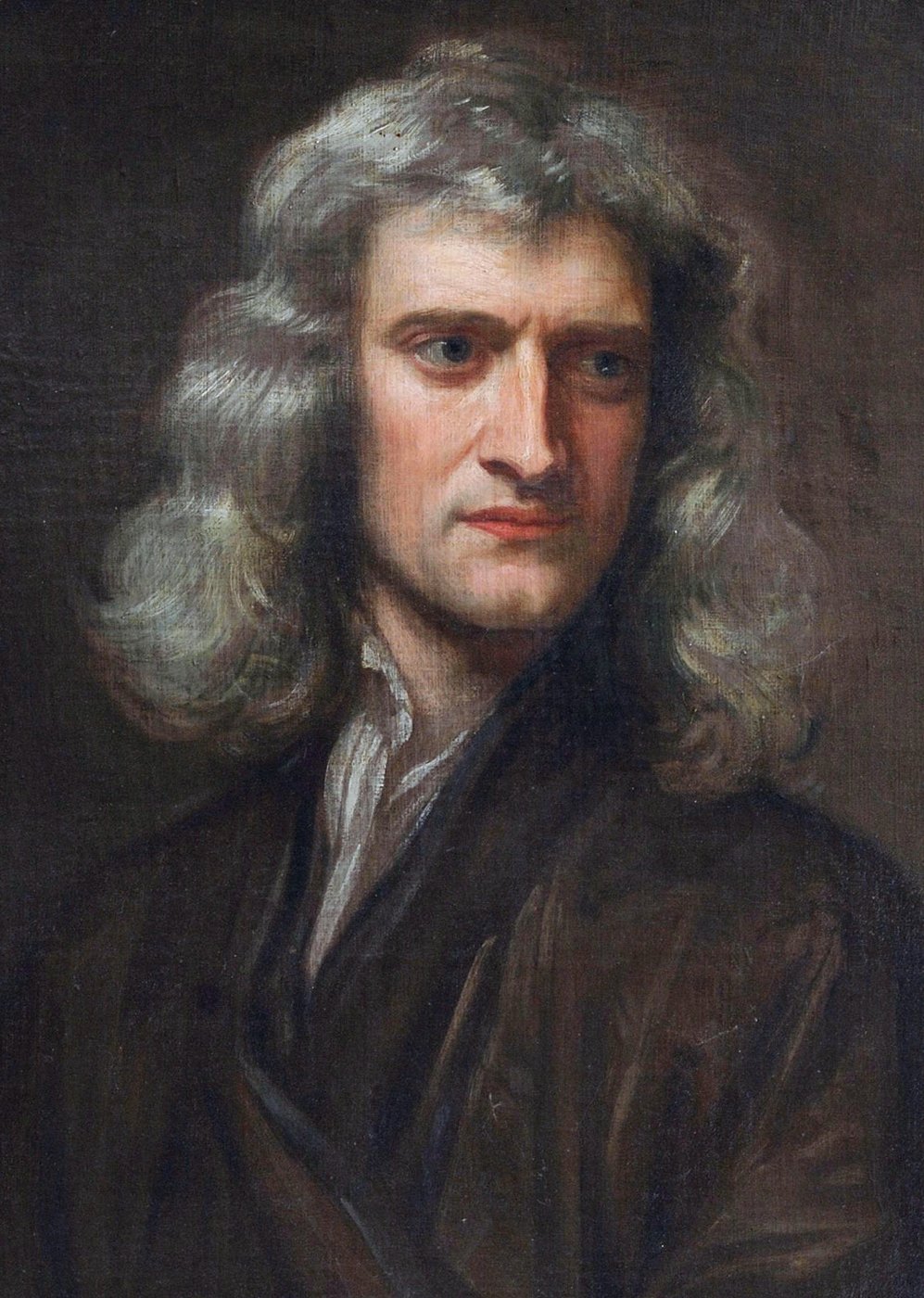
Isaac Newton, 1689, by Godfrey Kneller. Public domain, via Wikimedia Commons.

Wikipedia keeps a page called “List of Christians in science and technology,” organizing hundreds of names by century. It’s a real, useful thing to have. This isn’t that. This is a shorter list: thirteen people, each with a documented statement of their own faith, each a real contributor to physics, mathematics, or — in Gregor Mendel’s case — the biology that founded modern genetics. I’m not going to smooth over the parts of their stories that complicate a tidy narrative, and I’m going to be upfront about what this list can and can’t prove.
What this list actually is, stated plainly. These are people I could both document and connect to a real subject solvetheuniverse.com, a physics site working through what current science still can’t explain, already covers — not a representative sample of scientists, or of Christians, or proof that faith and science were never in tension for anyone. Educated Europeans before the twentieth century operated inside Christian institutions where public unbelief carried a real cost, Newton’s own story below being the clearest example — which also means Christian profession here was often close to the social default, not independent proof of anything about faith and science getting along. And this list, on its own, doesn’t answer the sharper version of the conflict question either: whether specifically Christian claims (miracles, revelation, Scripture as authority) sit inside the same kind of evidence and revision that physics runs on. Managing that tension quietly, the way Newton did with his hidden theology, or drawing a hard wall between the two domains, the way Lemaître did with Pope Pius XII, is not the same as the tension disappearing. All this list can actually show, and all I’m claiming it shows: active, documented Christian conviction and first-rank physical science running side by side, repeatedly, in people who didn’t treat their science as disqualifying their faith. A narrower claim than the title might suggest, and the honest one.
Johannes Kepler (1571–1630)
Kepler nearly trained for the Lutheran ministry before turning to astronomy, and he called astronomers “priests of the highest God in regard to the book of nature” — the line most securely his own. The more familiar “thinking God’s thoughts after him” is a widely used paraphrase of that same idea rather than a verified direct quote. His three empirical laws of planetary motion gave Newton the data Newton’s own dynamics would later explain in terms of a single force — gravity. Source: Breakpoint; Institute for Creation Research.
Blaise Pascal (1623–1662)
On the night of November 23, 1654, Pascal had a religious experience so intense he wrote it down on parchment and sewed it into his coat lining, where it was found after his death: “FIRE. GOD of Abraham, GOD of Isaac, GOD of Jacob, not of the philosophers and the learned.” His unfinished notes for a planned defense of Christianity became the Pensées. His barometric experiments and the law describing how pressure transmits through a fluid still carry his name — the same physical quantity this site’s own theory treats from a very different angle. Source: Plough; Word on Fire.
Robert Boyle (1627–1691)
Boyle wrote his own book of Christian apologetics, The Christian Virtuoso, arguing that studying nature was itself an act of worship. His will funded the Boyle Lectures, a standing series explicitly “for proving the Christian religion against notorious infidels.” His experiments on gases produced the law relating pressure and volume that bears his name. Source: BioLogos; Wikipedia, Boyle Lectures.
Isaac Newton (1642–1727)
Newton wrote more words on theology than on physics, and the General Scholium he appended to the Principia argues directly from the order of the cosmos to “an intelligent and powerful being.” Here’s the part that doesn’t fit a tidy story: Newton privately rejected the doctrine of the Trinity, a heterodox position he kept mostly hidden in private papers, since exposure would have cost him his Cambridge fellowship under the doctrinal subscription it required. His own theology sat outside orthodox Christianity, even as he argued forcefully for a Creator — worth saying plainly, since he’s the most famous name on this list and doesn’t belong in quite the same category as the others on it. His law of universal gravitation is the very thing this site’s own gravity page says its fringe theory is built to reproduce. Source: Vatican Observatory, the General Scholium; MacTutor History of Mathematics, Newton’s Arianism.
Michael Faraday (1791–1867)
Faraday belonged to the Sandemanians, a small biblically literalist sect, making his formal confession of faith in 1821 and serving as a deacon and later an elder in his congregation, regularly preaching to fellow members. His discovery of electromagnetic induction underlies the modern study of electricity and magnetism alike — the same two subjects this site’s own theory is still working out in its own mechanical terms. Source: Faraday Institute, Cambridge; Perspectives on Science and Christian Faith.
James Prescott Joule (1818–1889)
Joule held conventional Christian beliefs his whole life and read his own theology directly into his physics: “it is manifestly absurd to suppose that the powers with which God has endowed matter can be destroyed any more than they can be created by man’s agency.” That’s his own reading of the conservation of energy, commemorated today in the SI unit of energy that bears his name — the joule. His actual result doesn’t map onto any single physics topic on solvetheuniverse.com, so no link is forced here. Source: Encyclopedia.com.
George Gabriel Stokes (1819–1903)
Stokes served as president of the Victoria Institute, a society formed to defend Christianity against scientific objections, and delivered the 1893 Gifford Lectures on natural theology. His 1845 theory of how light drags through a luminiferous medium was a serious 19th-century attempt to describe the aether mechanically — a framework the Michelson-Morley experiment would later rule out. This site’s own aether page picks up the same old word for a different, modern idea, deliberately built to avoid that same fate. Source: Gifford Lectures.
Gregor Mendel (1822–1884)
Mendel was an ordained Augustinian friar at St. Thomas’s Abbey in Brno, a monastic community that supported serious scholarly work, and it was there that he ran the pea-plant experiments that founded modern genetics. His field is biology, not physics, so there’s no physics-topic link here — the connection to this site is thematic only, and a different question from his own: what science still can’t explain about how life began in the first place, a question upstream of the heredity he actually studied, not one his own work left open. Source: Vatican Observatory; Society of Catholic Scientists.
Lord Kelvin, William Thomson (1824–1907)
In his 1871 presidential address to the British Association, Kelvin spoke of “overpoweringly strong proofs of intelligent and benevolent design” lying all around us — a design argument, not a young-earth position; he accepted an old earth throughout his career. His 1852 work on the dissipation of energy was an early root of the second-law arguments later tied to why time has a direction at all — a question this site’s own theory names plainly as still undeveloped in its own mechanical terms. Source: Christian Heritage Edinburgh; the full 1871 address, archived text.
James Clerk Maxwell (1831–1879)
Maxwell served as an elder in his Presbyterian congregation and had a documented conversion experience at Cambridge. He wrote that the scientific mind is “bound to study science that their view of the glory of God may be as extensive as their being is capable of,” and by his own account died affirming “the gospel of the Saviour.” His equations unifying electricity and magnetism led directly to the discovery that light itself is an electromagnetic wave. Source: Clerk Maxwell Foundation; Vatican Observatory.
Max Planck (1858–1947)
Planck served as a churchwarden in his Lutheran parish from 1920 until his death and gave a 1937 lecture titled “Religion and Natural Science.” Worth saying plainly: historians are genuinely divided on whether his faith was creedal Christianity or a broader belief in an ordering God, and I’d rather flag that real uncertainty than round it up to something more definite than the record supports. His discovery that energy comes in discrete packets, proportional to frequency, founded quantum theory — the historical result any future account of proportional-wave-theory, one of this site’s own placeholder topics with no developed content yet, would have to reckon with. Source: Wiley, historiographical review of the debate.
Arthur Compton (1892–1962)
The son of a Presbyterian minister, Compton stayed an active Presbyterian throughout his life and wrote The Freedom of Man, arguing science and Christian faith fit together. His 1923 discovery that scattered light shifts wavelength, showing that light transfers energy and momentum in discrete packets, won the 1927 Nobel Prize — real evidence for the particle-like behavior of light and radiation specifically, the same broad territory this site’s own subatomic-particle page stakes out for its foundational (and much more sweeping) claim that everything at that scale behaves the same way. Source: Messiah University, “Prophet of Science, Prophet of God”.
Georges Lemaître (1894–1966)
Lemaître was an ordained Catholic priest who was simultaneously a working cosmologist, and when Pope Pius XII suggested the Big Bang confirmed Catholic doctrine, Lemaître pushed back publicly, insisting science and faith answer different kinds of questions and shouldn’t be collapsed into each other. His “primeval atom,” the universe expanding outward from a single point, is the origin of modern Big Bang cosmology — the same open question this site’s own piece on what science still can’t explain about where the universe came from picks up. Source: BioLogos; American Museum of Natural History.
Thirteen people, three centuries, and not one tidy story among them. A Trinity-denying theologian who still argued forcefully for a Creator. A priest who told the pope to stop mixing physics and doctrine. A man whose own church membership historians still argue about. None of that is a weakness in the record — it’s what real documentation looks like instead of a legend smoothed flat, and I’d rather leave Newton and Planck exactly as complicated as the sources make them than round either one up to a tidier example.
What this list can honestly claim is narrower than “faith and science never clash,” and it doesn’t land the same way on every name. For eleven of the thirteen, the record supports it cleanly: a documented, professed Christian faith and first-rank science held together, in the open, for an entire working life. Newton and Planck are different, and I’d rather name that than blur it. Newton argued forcefully for a Creator his whole public life while privately rejecting the Trinity, a heterodox theology he never professed as Christian orthodoxy; what his science never required was abandoning belief in God, not a specific creed. Planck’s own theological position is genuinely disputed by historians, so I can say he saw no conflict between his science and his faith in an ordering God, without claiming more precision than the record gives me. None of the thirteen, including these two, ever treated serious science as grounds for setting God aside. That’s the claim this list actually supports. Whether Christianity’s own specific claims, miracles, revelation, Scripture read as authoritative, sit inside the same rules of evidence physics runs on is a harder question, and this list isn’t built to answer it. I’m not going to pretend it does.